
Creating Your Own “Lunch With the Widows” Experience
The comfort and enlightenment that come from talking with others who have lost a spouse can be incredibly valuable.
How to Get Started

1. Ponder your goals and what you want to learn. If your goal is simply to draw comfort from and share comfort with people in the same place on your journey, you might want to include other new widows. My starting goal was to figure out what I needed to know to navigate the road ahead—and so, I tended to speak with widows who had already done some of that navigating—women who had been widowed anywhere from about 2-10 years.
2. Based on your objective(s), create a “lunch with the widows” contact list. My list was a blend of good friends, people I knew slightly, and a few whom I’d never met before our lunches. I expanded my list by asking friends and other widowed individuals for recommendations.
3. Decide on your format. The majority of my conversations were held over Zoom or phone due to the in-person gathering restrictions during the pandemic. Talking virtually can mean easier scheduling and the ability to have conversations long-distance. That said, in-person conversations can help forge a strong personal connection and can generally run longer if desired. You’ll also need to decide whether you want to hold individual or group discussions. Only one of my “lunches with the widows” involved more than one person. I found for myself that I appreciated the privacy and intimacy of one-on-one conversations, but either format works.
4. Extend the invitation. For those contacts who are good friends, a phone call works well. For those who you don’t know well, a written invitation explaining your goals is helpful. If the widow you’re inviting is someone you don’t know at all, you should mention how (and by whom) she was referred to you.
5. Keep the wording of the invitation simple and to the point.
Tips for Extending the Invitations

If I didn’t know the person, I simply explained that I was a new widow looking for advice and encouragement, and that a friend (name that person) had recommended that I reach out to her.
I then told her a little about my situation (amount of time widowed, where I lived, what I did in life, etc.).The next steps were always the same, whether I knew the person or not.
I’d briefly spell out what I was looking for (their advice on navigating widowhood, their perspective on any particular challenges I might encounter that I hadn’t thought of (which were numerous at that point), any experiences they’d like to share, any resources they’d like to suggest to me, etc.).
I’d ask for a one-hour lunch (or 60 minutes of their time on a virtual meeting or call). Having lunch over the conversations made it more natural and less formal, which is one reason why I think I gravitated to those so much. That said, food isn’t essential. If your widowed friend works and can only meet at 8 p.m., do so. And I am a firm believer in asking for 60 minutes, even if you find you don’t need that much time. Asking for 30-45 minutes makes it sound much more transactional, tightly-scheduled, and process-driven, rather than perspective-driven. People need a little time to warm up to this kind of conversation.
I compiled my list of questions and sent them to the widows ahead of time. Although I had about a million questions, I kept that list pretty simple—I didn’t want to overwhelm or intimidate someone by expecting them to think through dozens of responses. In short, I wanted it to feel like a conversation between friends, not a job interview.
Framework of the Interview

I always began by giving the other widow space to talk about herself and her experience, as little or as much as she liked. I’d invite her to share any part of her story that she wanted to share—and I invited her to talk about her own spouse if she wanted to. If she expressed an interest, I’d tell her a little bit about Mark and my life with him—taking care not to make myself the focus of the conversation. The focus was on her and what she’d learned. When we moved to questions, here are a few I’d lead with (as noted in the book, this first one became my openervery first question in all these conversations):
Of all the challenges that have come your way since you lost your spouse, what was the biggest surprise? What did you not see coming?
What are the very first things you’d advise me to do?
In what ways have your perspectives changed from the first year or two of your widowhood? Has the advice you’re giving me changed from what it would have been a few weeks or months after you lost your spouse?
How do you get the help you need for the things your spouse used to do? (Those things might include—but don’t necessarily include—home repairs or things like that.) But don’t assume—ask. “What did your spouse use to be responsible for that you’ve now had to figure out how to manage or get help with?”
(I have gotten some interesting answers from this one): Have there been any silver linings, or unexpected blessings, to your experience? (Several of the women I spoke to over time emphasized that, once they had ventured a little way down the widowhood journey, they began to see some unexpected blessings—they may have grown closer to certain other family members, for example, or then may have gained more confidence or gone back to continue their education.) Of course, these silver linings aren’t preferable to the presence of their spouse, but if they’ve experienced them, invite them to share.
Looking back now on your experience, what are the most important lessons you’ve learned?
I usually never sent more questions than this. As I extended the invitation, I also mentioned that, if they didn’t feel they had answers to these questions, or if they had different advice completely, that would be wonderful, and I’d still value a conversation with them.
As you’ll notice, most of these questions are designed to talk about experiences that have learning value and can lead to positive progress. But don’t try to force that. This is an opportunity for this person, who has so generously given you her time and made herself vulnerable, to tell her story.
During and After
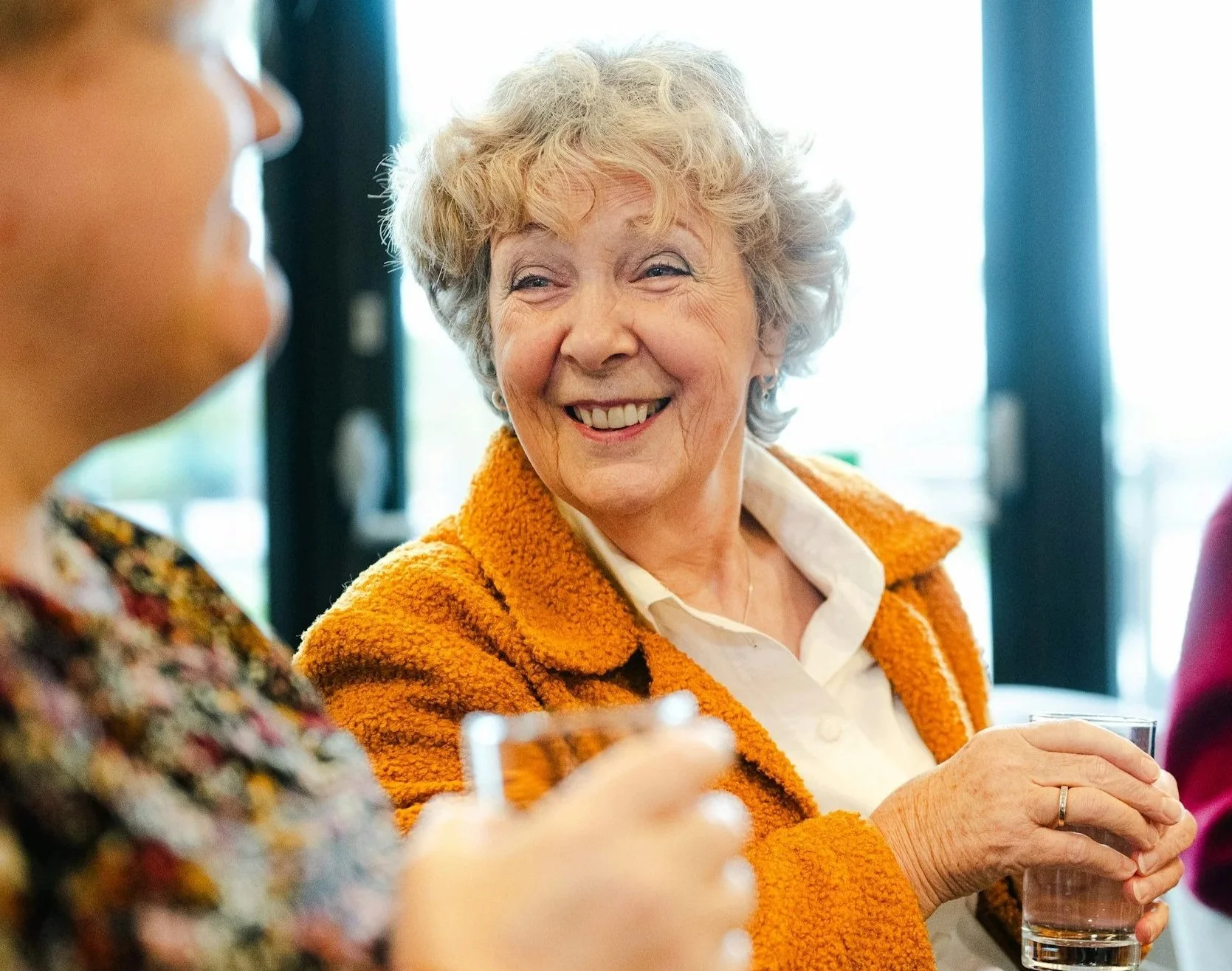
Set up the restaurant reservation or the call/virtual meeting. I used Zoom a lot, but there are many virtual platforms available. If you don’t know how to sign up for them or use them, ask a family member, ministering brother or sister, youth from your ward, etc., to help you.
Gather your lunch stuff (or go to the restaurant) and have your conversation! If I wanted to take personal notes, I always asked the widow if she was OK with that. And of course, I assured her that I would never publicly identify her without her permission.
Write a sincere thank-you note via email or snail mail. Reflect a little on what you learned and how it has helped you.
Ponder, ponder, ponder. Often, when one of the widows told me something at a lunch, it was weeks or months before I fully appreciated the wisdom of it—my own trajectory of experiences simply hadn’t yet caught up to hers.
Stay Up to Date
Stay up to date with my news, events and publications by joining my mailing list.